
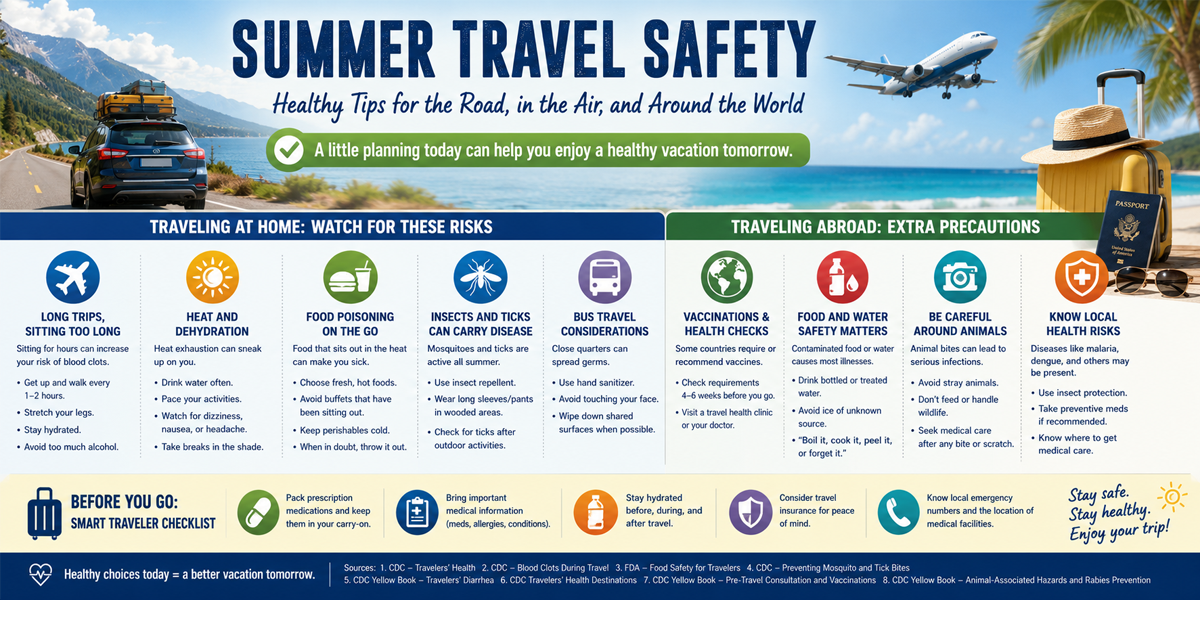
Summer vacation is a time to relax, explore, and recharge. Whether you’re taking a road trip, boarding a plane, or traveling overseas, most people focus on packing clothes and making reservations—not protecting their health.
While serious travel-related illnesses are uncommon, certain risks increase during summer travel. Knowing what to watch for can help you avoid bringing home more than souvenirs.
Domestic Travel: Hidden Health Risks Close to Home
Sitting Too Long Can Be Dangerous
Long hours in a car, airplane, or bus can increase the risk of developing a blood clot in the legs, known as deep vein thrombosis (DVT).[1] While the risk is low for most healthy travelers, it increases with age, obesity, smoking, recent surgery, and certain medical conditions.[1]
During trips lasting more than four hours:
- Get up and walk periodically.
- Stretch your legs regularly.
- Stay hydrated.
- Avoid excessive alcohol consumption.[1]
Heat Is More Dangerous Than Many People Realize
Extreme heat causes hundreds of deaths and thousands of emergency department visits in the United States each year.[2] Travelers are especially vulnerable because vacations often involve outdoor activities, unfamiliar environments, and more physical activity than usual.
Watch for symptoms of heat exhaustion:
- Heavy sweating
- Dizziness
- Nausea
- Fatigue
- Headache[2]
Heat stroke is a medical emergency and can be life-threatening.[2]
Food Poisoning Doesn’t Just Happen Overseas
Many travelers assume foodborne illness is only an international concern, but outbreaks frequently occur in the United States.[3] The biggest risk isn’t usually the restaurant—it’s food that sits too long at unsafe temperatures during travel, sporting events, festivals, and outdoor gatherings.[3]
Be cautious with:
- Buffet foods that have been sitting out
- Convenience-store foods that aren’t properly refrigerated
- Picnic foods left in hot vehicles
- Undercooked meats at cookouts[3]
Mosquitoes and Ticks Travel Too
Summer travelers often spend more time hiking, camping, fishing, and enjoying the outdoors. Mosquitoes can transmit West Nile virus, while ticks can spread Lyme disease and several other infections.[4]
After spending time outdoors:
- Perform a tick check.
- Remove ticks promptly.
- Use insect repellent when appropriate.[4]
International Travel: A Different Set of Risks
Traveling abroad can expose you to health concerns that are uncommon in the United States.
Travelers’ Diarrhea Remains the Most Common Travel Illness
Even experienced travelers can become ill from contaminated food or water.[5]
Higher-risk items include:
- Raw vegetables
- Unpeeled fruits
- Untreated water
- Ice from unknown water sources
- Undercooked foods[5]
A useful rule is:
“Boil it, cook it, peel it, or forget it.”[5]
To reduce risk:
- Ascend gradually when possible
- Stay hydrated
- Avoid excessive alcohol intake
- Rest if symptoms develop.[9]
Not Every Destination Has the Same Disease Risks
Depending on where you’re traveling, diseases such as hepatitis A, typhoid fever, malaria, dengue fever, and yellow fever may be present.[6]
Some destinations require vaccinations or preventive medications before arrival.[6]
Travel health experts recommend checking destination-specific guidance at least four to six weeks before departure.[7]
Animal Encounters Can Have Serious Consequences
Many travelers enjoy interacting with local wildlife or stray animals. However, animal bites and scratches remain a significant source of travel-related medical emergencies.[8]
Rabies is still common in many parts of the world.[8]
Avoid:
Feeding stray animals
Petting unfamiliar dogs or cats
Handling wildlife for photographs[8]
Before You Leave
A few minutes of preparation can prevent major travel problems.
Smart Traveler Checklist
- Carry prescription medications in your carry-on luggage.[9]
- Research health risks specific to your destination.[6]
- Stay hydrated during long trips.[1]
- Be cautious with food that has been sitting out.[3]
- Protect yourself from insects when spending time outdoors.[4]
- Consider a pre-travel health visit for international trips.[7]
Enjoy the Journey
Most vacations are memorable for all the right reasons. By paying attention to a few often-overlooked health risks—blood clots, heat illness, food poisoning, insect-borne diseases, and destination-specific international concerns—you can spend less time worrying about your health and more time enjoying your adventure.
Have a safe, healthy, and enjoyable summer!
©2026ProgressiveHealth
References
1. Centers for Disease Control and Prevention (CDC). Blood Clots During Travel.
2. CDC. Heat-Related Illness.
3. U.S. Food and Drug Administration. Food Safety for Travelers.
4. CDC. Preventing Mosquito and Tick Bites.
5. CDC Yellow Book. Travelers’ Diarrhea.
6. CDC Travelers’ Health Destinations.
7. CDC Yellow Book. Pre-Travel Consultation and Vaccinations.
8. CDC Yellow Book. Animal-Associated Hazards and Rabies Prevention.
9. CDC Travelers’ Health. Traveling with Medicines.